
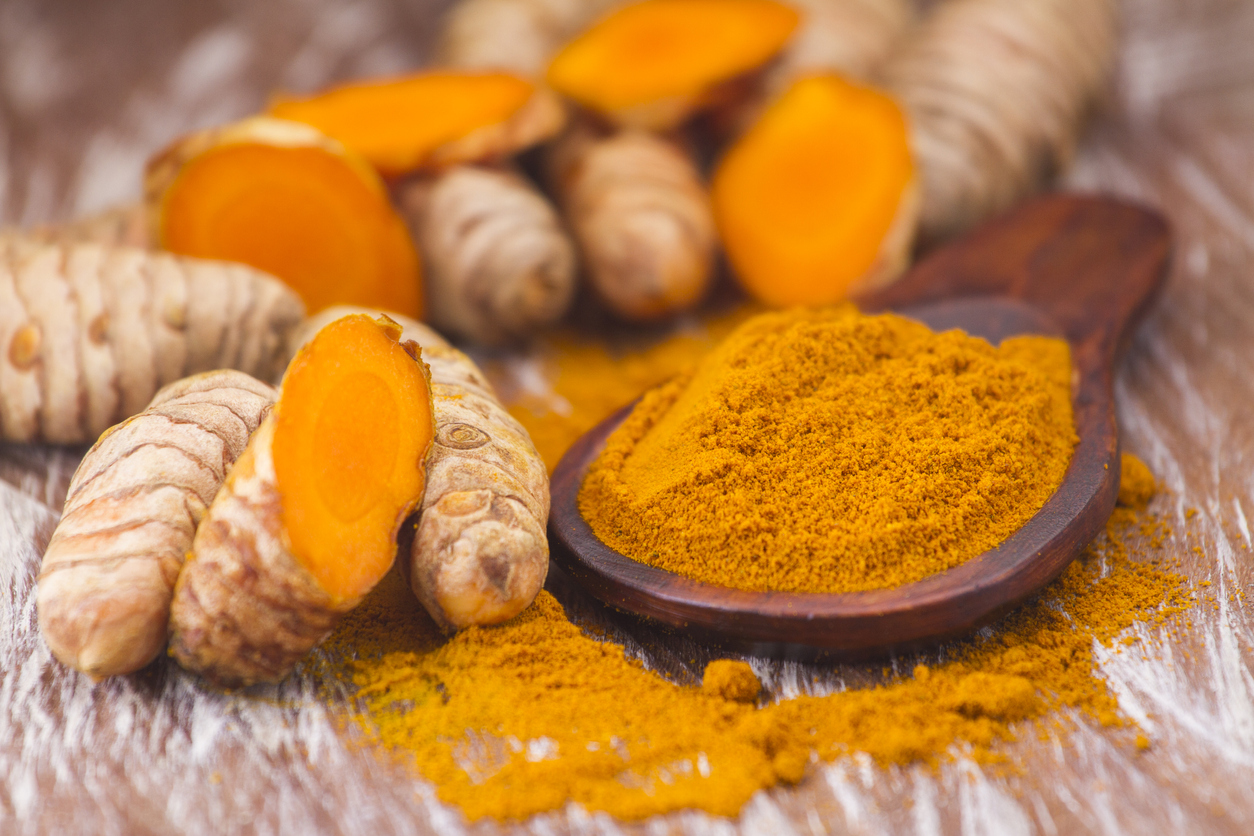
Curcumin is derived from the Indian spice, turmeric. Curcumin has been used in Ayurvedic medicine for ages. It is widely studied in medicine for its anti-cancer, antioxidant, antineoplastic and anti-inflammatory properties. But is curcumin good for dogs? And, if so, what are the benefits and dosing?
To understand the benefits of curcumin, we first need to understand inflammation.
What is Inflammation?
Inflammation in the body is not necessarily a bad thing. It’s an important part of the immune system to attempt to heal the body from injury, defend against pathogens such as viruses and bacteria and to repair tissue.
When you get a cut or a bruise, that’s inflammation. But inflammation should be a temporary condition that addresses an issue and then goes away. Once the issue is resolved (e.g., the bruise or cut heals), the inflammation should subside.
The problem with inflammation is when it doesn’t subside, resulting in a chronic inflammatory state.
Chronic inflammation results in many chronic conditions such as Inflammatory Bowel Disease (IBD), arthritis, asthma, colitis, Crohn’s Disease, heart disease, endocrine disorders even cancer. In fact, inflammation is at the root of pretty much every chronic disease.
In such instances, anti-inflammatory compounds such as curcumin can come to the rescue, helping decrease inflammation.
Anti-inflammatory Benefits of Curcumin
Researchers at Trinity Biomedical Sciences Institute at Trinity College Dublin discovered something interesting about macrophage cells (large white blood cells that are an important part of the immune system). Macrophage cells, which react to infections by jumpstarting inflammation and then depressing it to repair the damage – switch the role of mitochondria (the energy powerhouses of cells) from energy production to toxic compound production. This toxic compound production then amplifies inflammation.
The scientists hope to figure out how to suppress macrophages to an appropriate level to reduce associated tissue damage when the body’s inflammation alert status has amped up too far.[1][2]
However, the development and release of new medications to suppress macrophages probably will not occur for several years and we do not know the potential side effects.
In the meantime, we have several options and some of them are not the best.
Corticosteroids, a widely used type of anti-inflammatory, suppress the immune system to reduce inflammation.
Another popular prescription or over-the-counter option is non-steroidal anti-inflammatory drugs (NSAIDs). Think Advil. Most NSAIDs inhibit inflammatory mediators from stimulating more inflammatory mediators.
Corticosteroids and NSAIDs can cause liver and kidney problems, or even other inflammations like gastritis that can lead to gastrointestinal ulcers.
So, what is the alternative? Curcumin.
What is Curcumin?
Curcumin is a bright yellow/orange colored compound that is found in the spice turmeric. Curcumin possesses powerful anti-inflammatory properties.
Curcumin works similarly to NSAIDs, but without the nasty side effects of NSAIDs, such as damaging the gastrointestinal area. In fact, curcumin may help heal or prevent inflammatory conditions in the gut.
It’s estimated that 80% of the cases of gastric ulcers are due to the use of NSAIDs.[3] One study compared rats treated with NSAIDs to rats treated with NSAIDs and curcumin (note that I do not endorse animal testing). In the NSAIDs-only group, blood tests revealed that the rats’ stomachs showed a mild to moderate increase in white blood cells, which are indicators of inflammation in the body. Biopsies showed lesions that were erosive and ulcerative.
The rats treated with both NSAIDs and curcumin had better results: only a mild white blood cell increase and fewer erosive lesions in the stomach lining.[4]
Another study indicated that curcumin actually increased the gastric wall mucus to combat NSAID inflammation.[5]
Curcumin and IBD
Inflammatory bowel disease (IBD) is a painful condition without a cure. Currently, the protocol is to avoid the foods that may cause the inflammation. However, researchers do know some of the earmarks that are associated with the disease. For instance, lipid peroxidation is the oxidation of fats in the body and has been implicated as an IBD perpetuator. Additionally, nitric oxide has been shown to be overly produced and present in people with IBD. Taking these two and other factors into account, Indian researchers induced IBD in mice (which I do not endorse!) and then treated them with curcumin. They concluded that curcumin demonstrates antioxidant and anti-inflammatory effects because of reductions in:
- Upregulation of pro-inflammatory Th1 cytokine response leading to the suppression of nitric oxide and a decrease of the recruitment of white blood cells.
- Lipid peroxidation.
- Tissue injury.
A similar and simultaneous study in Japan showed the same results.[6]
Is Curcumin Good for Dogs with Osteoarthritis?
What about other inflammatory conditions not around the gut? A study by Colitti et al. compared NSAIDs treatment to curcumin treatment for dogs with osteoarthritis. They wanted to find out how the two different treatments affected the gene expression of peripheral white blood cells. After 20 days of treatment, they measured their results and showed that both groups had significant decreases in the differentially expressed transcripts. Genes involved in inflammatory response and in connective tissue development and function dramatically decreased.
However, specific molecular targets of the curcumin group were not observed in the NSAID group, such as:
- Up-regulation in the tumor necrosis factor receptor (TNFR-1) signaling pathway.
- Down-regulation in the role of pro-inflammatory interleukin 18 (IL-18) cytokines in mediating communication between immune cells. People with Crohn’s Disease – an inflammatory intestinal dysfunction – have an abundant amount of IL-18.
- Fibrinolysis, which is the breakdown of the enzyme fibrin in blood clots.
The authors concluded that curcumin offers a complementary anti-inflammatory support for osteoarthritis treatment in dogs.[7]
Based on the evidence, I recommend discussing the use of curcumin in addition to or in lieu of NSAIDs with your holistic veterinarian. Curcumin provides the same beneficial anti-inflammatory effects as NSAIDs without causing any harm to the gut.
Curcumin and Disease
Studies of curcumin show promise in the prevention and treatment of a wide range of diseases, including:
- Cancer
- Cognitive decline and Alzheimer’s disease
- Diabetes Mellitus
- Inflammatory conditions
- Periodontal disease
- Rheumatoid arthritis
- Ulcerative colitis [8]
Curcumin Cautions
Of course, there can be drawbacks from curcumin use. It may increase the risk of bleeding when given in combination with some medications such as NSAIDs, blood thinners and antiplatelet drugs, or when given with certain foods such as botanicals, Gingko biloba, garlic and saw palmetto.
Consult with your veterinarian if your dog is on chemotherapy, as curcumin can decrease the effectiveness of certain chemotherapy drugs.
Curcumin vs. Turmeric
There are many recipes for “golden paste” on the Internet, which is a paste made from turmeric, coconut oil and black pepper. There is nothing at all wrong with turmeric (in fact it’s very healthy), but bear in mind that when we talk about the benefits of curcumin as used in scientific studies, we’re talking about the standardized compound, which has been isolated from turmeric.
Turmeric root powder contains only about 3% curcumin by weight, as compared to turmeric extract, which contains up to 95% curcumin.
Curcumin Dosage
Two challenges occur with curcumin: it is poorly absorbed across the GI tract and it is rapidly cleared from the blood.
To overcome these hurdles, I advise giving your dog a high quality curcumin supplement in conjunction with a fatty food such as olive oil, which can increase its absorption.
Curcumin doses in human studies vary widely. In dogs with cancer, Drs. Susan Wynn and Steve Marsden recommend a dose ranging from 15 to 20 mg per pound of body weight daily.
To ensure a steady supply of curcumin in the bloodstream, divide the dosage and space evenly three times throughout the day.
I like this product by Now Foods. It is standardized to 95% curcumin and also contains Demethoxycurcumin and Bisdemethoxycurcumin, two other beneficial curcuminoids found in turmeric. Be sure to adjust the dose to your dog’s size.
Before we go, I’d love to know:
- Do you give curcumin to your dog?
- If so, what do you give it for and have you seen a benefit?
References
- Mills EL, Kelly B, Logan A…O’Neill LA. (2016). ‘Succinate Dehydrogenase Supports Metabolic Repurposing of Mitochondria to Drive Inflammatory Macrophages’, Cell, Retrieved from http://www.cell.com/cell/fulltext/S0092-8674(16)31162-X.
- NutritionReview.org. (2016, Sept. 24). New Finding May Lead to Effective Therapy for Inflammatory Diseases, Nutrition Review, Retrieved from http://nutritionreview.org/2016/09/new-finding-may-lead-to-new-therapy-for-inflammatory-diseases/.
- Kumar Yada S, Kumar Sah A, Kumar Jha R, Sah P & Kumar Shah D. (2013). ‘Turmeric (curcumin) remedies gastroprotective action’, Pharmacognosy Reviews, vol. 7, no. 13, pp.42–46.
- Thong-Ngam D, Choochuai S, Patumraj S, Chayanupatkul M & Klaikeaw N. (2012). ‘Curcumin prevents indomethacin-induced gastropathy in rats’, World Journal of Gastroenterology, vol. 18, no. 13, pp. 1479–1484.
- Rafatullah S, Tariq M, Al-Yahya MA, Mossa JS & Ageel AM. (1990). ‘Evaluation of turmeric (Curcuma longa) for gastric and duodenal antiulcer activity in rats’, Journal of Ethnopharmacology, vol. 29, no. 1, pp. 25-34.
- Ukil A, Maity S, Karmakar S, Datta N, Vedasiromoni JR & Das PK. (2003). ‘Curcumin, the major component of food flavour turmeric, reduces mucosal injury in trinitrobenzene sulphonic acid-induced colitis’, British Journal of Pharmacology’, vol. 139, no. 2, pp. 209–218.
- Colitti M, Gaspardo B, Della Pria A, Scaini C & Stefanon B. (2012). ‘Transcriptome modification of white blood cells after dietary administration of curcumin and non-steroidal anti-inflammatory drug in osteoarthritic affected dogs’, Veterinary Immunology and Immunopathology, vol. 147, nos. 3–4, pp. 136–146.
- Linus Pauling Institute (2016). Curcumin. Oregon State University. Retrieved from https://lpi.oregonstate.edu/mic/dietary-factors/phytochemicals/curcumin.