
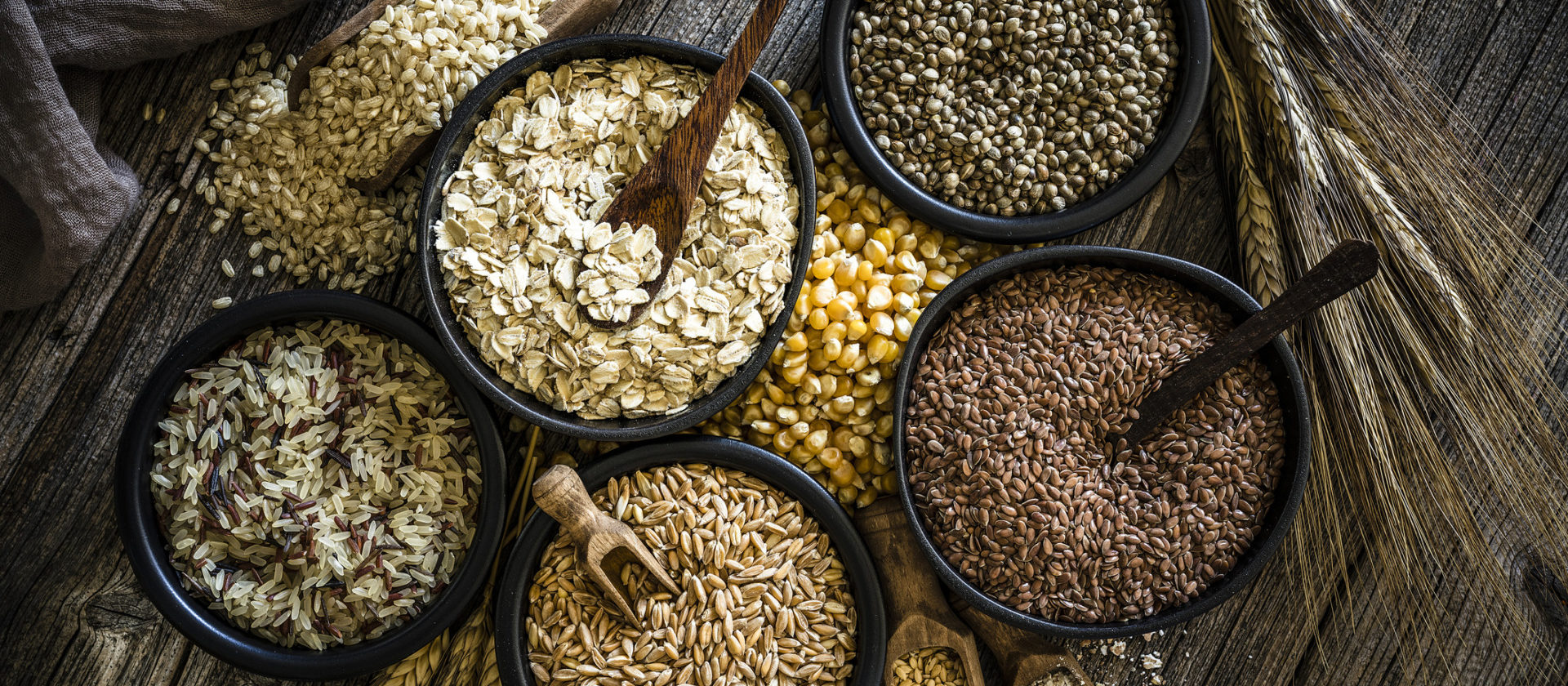
When you think of “fiber”, does your body shudder as your mind conjures up images of crumbly bran muffins, cardboard-like wafers and cereals that look more like twigs than food? That’s how I used to feel about fiber. Since I became vegan, however, I’ve discovered that fiber is found in a wide variety of delicious plant-based foods. This is great news, because fiber is important for health, and most of us do not get enough of it.
But did you know that our canine companions can also benefit from fiber? While there is no Recommended Daily Allowance (RDA) for fiber and dogs, getting the right amount, and the right type, can help keep your dog in tip-top shape. Let’s take a closer look at fiber, its health benefits and some fiber-rich foods your dog will enjoy.
What is fiber?
Fiber is a type of carbohydrate found in the cell walls of plants. Like all carbohydrates, fiber is made up of chains of glucose (sugar) molecules bound together. When we eat carbohydrates, digestive enzymes break down these chains of glucose molecules into simple sugars that are used as energy. Animals and humans lack the digestive enzymes to break down the bonds in fiber, however, so it passes through the stomach and small intestine largely intact.
Fiber is found in plant foods, including fruits, vegetables, whole grains, nuts, beans and seeds. Refined grains are not a good source of fiber because the bran, the fiber-rich outer layer, has been removed during milling. Animal products do not contain fiber.
Types of Fiber
Fiber is categorized as either soluble or insoluble.
Soluble fiber dissolves in liquid. As it travels through the gastrointestinal tract, soluble fiber absorbs water, swelling into a gel-like substance that slows down the digestive process.
Insoluble fiber does not dissolve in liquid and passes through the GI tract largely intact. Insoluble fiber adds bulk to the stool and speeds up the passage of food and waste through the digestive system.
Most foods contain a combination of soluble and insoluble fiber, with one type dominating.
Health Benefits of Fiber
Fiber offers a wide variety of health benefits, including:
- Controls large-bowel diarrhea (soluble).
- Lowers cholesterol by attaching to it in the digestive tract and removing it from the body (soluble).
- Manage diabetes mellitus by slowing the absorption of sugar into the bloodstream (soluble).
- Optimizes colon health and may reduce the risk of colon cancer (soluble and insoluble).
- Promotes optimum weight by providing a low-calorie feeling of fullness (soluble and insoluble).
- Reduces constipation and straining (insoluble).
- Promotes healthy gut bacteria (soluble fiber).
Fiber and Dogs: Which Type of Fiber is Best?
Both soluble and insoluble fibers offer benefits, so healthy dogs should eat a combination of both types.
At one time or another, most dogs suffer from acute diarrhea. In these situations, adding soluble fiber can help manage the situation by absorbing water in the intestinal tract and slowing down the digestive process. Those of you who have used canned pumpkin to help with occasional bouts of doggy diarrhea have experienced the benefits of soluble fiber.
If your dog suffers from chronic diarrhea, it’s important to determine whether the problem originates in the large intestine (colon) or the small intestine. Large intestinal diarrhea is shown to benefit from added dietary fiber, but small-intestinal diarrhea is not fiber-responsive.
A dog who races to go outside, has accidents in the house or passes stool with mucus or fresh blood is likely suffering from large intestinal diarrhea. A trip to the veterinarian can confirm the diagnosis and underlying cause.
For dogs suffering from constipation, adding foods higher in insoluble fiber may “get things going” a little easier, as it helps food pass more quickly through the stomach and intestines. Avoid giving insoluble fiber to dogs with diarrhea, since it can act as a natural laxative. Insoluble fiber has also been shown to worsen symptoms in people suffering from IBS.
Fiber and Poop
When I work with clients to incorporate more fiber-rich foods into their dog’s diet, by far the most common question I receive concerns the increased volume of the dog’s stools. Many people become panicked that something is wrong, even when the consistency is perfect, and I have a theory why.
Proponents of high-meat, raw food diets have conditioned us to believe that tiny, hard stools are normal and healthy for dogs. Many veterinarians I know believe that these dogs are actually chronically constipated due to a lack of dietary fiber, and this is not healthy.
Proper elimination and stool volume help maintain healthy anal glands, but that’s not the only benefit. Dead bacteria and other undesirable substances make up a large portion of the stool’s dry matter. Larger stools that occur when fiber is initially increased can be a sign of detoxification.
So, don’t be concerned if adding fiber-rich foods increases your dog’s stool volume. As long as everything else looks good, this is a normal and healthy change. Just go slowly and give his digestive system time to adjust, especially if he currently eats a low-fiber diet high in animal ingredients.
A Word on FODMAPS
Certain fibers are high in FODMAPS (Fermentable Oligosaccharides, Disaccharides, Monosaccharides and Polyols), carbohydrates that pass through the small intestine and serve as “food” for the good bacteria in the large intestine (colon). As the bacteria in the colon digest these fibers, rapid fermentation takes place. This fermentation process offers many health benefits, including increasing the number of beneficial bacteria in the colon, however it can also create gas, bloating, diarrhea, stomach pain, cramping and other symptoms in individuals suffering from IBS (irritable bowel syndrome), GERD (gastrointestinal reflux disease) and similar gastrointestinal conditions. It may be necessary to temporarily eliminate high-FODMAP foods for dogs suffering from these conditions and then slowly reintroducing them when symptoms subside to determine which ones are problematic. To learn more about FODMAPS, visit https://www.monashfodmap.com.
Foods High in Fiber
Foods High in Soluble Fiber
- Apples (with skin)
- Bananas
- Barley, cooked
- Beans and legumes, cooked (black beans, garbanzo beans, kidney beans, white beans, lentils, black-eyed peas)
- Blackberries
- Green peas, cooked
- Flaxseeds (finely ground, not whole)
- Kiwi fruit
- Oats and Oatmeal, cooked
- Okra, cooked
- Pumpkin, canned, no-sodium (not pumpkin-pie filling)
- Psyllium (powder only)
Foods High in Insoluble Fiber
- Beans and legumes, cooked
- Bran
- Blueberries
- Broccoli, cooked
- Carrots, raw
- Green, leafy vegetables (e.g., collards, kale, spinach)
- Green Beans, cooked
- Pears (with skin)
- Potato (with skin), cooked
- Raspberries
- Seeds (e.g., chia seeds, flaxseeds, pumpkin seeds, sunflower seeds)
- Whole grains, cooked (e.g., amaranth, quinoa, millet, rice, rye)
There is a whole world of healthy, fiber-rich foods your dog will enjoy, so go ahead and branch out beyond the canned pumpkin.
This article originally appeared in the August/September 2019 issue of Dogster magazine.