

Since July 2018, the U.S. Food & Drug Administration’s (FDA) Center for Veterinary Medicine has been investigating a possible link between non-hereditary dilated cardiomyopathy in dogs and certain types of pet foods and dietary ingredients. DCM is a serious type of heart disease that I will discuss more about in a moment. The FDA’s investigation focused primarily on grain-free diets featuring non-soy legumes (e.g., peas, lentils and chickpeas) as well as potatoes as the main ingredients. This investigation resulted in a public panic, brought on largely be sensationalism and misinformation that was spread in the mainstream press and on social media. Because of this, many people have been afraid to feed their dogs a plant-based diet.
I now have a vitally important update to share with you:
On December 23, 2022, the FDA announced that it would cease releasing further public updates regarding the potential link between certain diets and canine DCM.
The FDA stated on its website:
FDA does not intend to release further public updates until there is meaningful new scientific information to share. A count of reports of DCM in dogs submitted to FDA as of November 1, 2022, has been added to Questions & Answers: FDA’s Work on Potential Causes of Non-Hereditary DCM in Dogs. FDA has followed up on a subset of these reports, but is unable to investigate every report to verify or confirm the reported information. While adverse event numbers can be a potential signal of an issue with an FDA regulated product, by themselves, they do not supply sufficient data to establish a causal relationship with reported product(s). FDA continues to encourage research and collaboration by academia, veterinarians, and industry.
This news comes in the wake of significantly declining reports of DCM cases between 2020 – 2022 compared to the previous two years.
The following information on reported cases of dilated cardiomyopathy in dogs has been excerpted from the FDA’s website, updated as of 12/23/22:
How many reports of DCM has FDA received?
The following graph shows the number of reports submitted to FDA since 2014 and indicates the dates on which FDA issued public updates on the investigation. The table that follows shows the number of reports of DCM in dogs submitted between previous public communications from FDA, up to November 1, 2022.
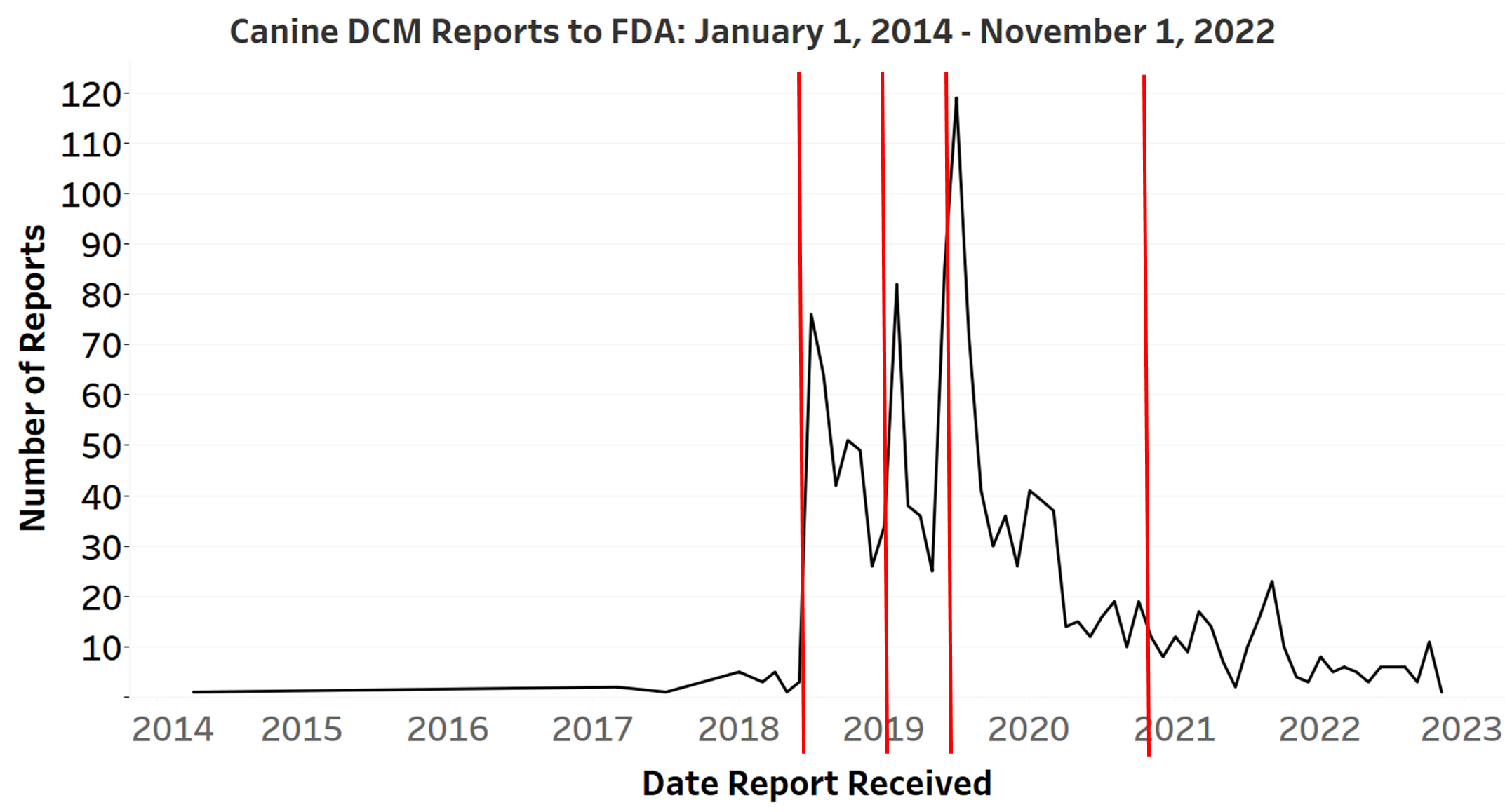
Number of reports submitted to FDA of DCM in dogs* †
| Jan. 1, 2014 – Nov 30, 2018 | Dec 1, 2018 – Apr 30, 2019 | May 1, 2019 – July 31, 2020 | Aug 1, 2020 – Nov 1, 2022 | Total: Jan 1, 2014 – Nov 1, 2022 |
|---|---|---|---|---|
| 329 | 190 | 608 | 255 | 1,382 |
*While many of the reports submitted to FDA include extensive clinical information, including echocardiogram results, cardiology/veterinary records, and detailed diet histories, the report counts are not limited to those with extensive records and include all reports in which one or more dogs was simply stated to have been diagnosed with DCM. FDA has followed up on a subset of these reports, but is unable to investigate every report to verify or confirm the reported information. FDA did not include in the many general cardiac reports submitted to FDA that did not report a DCM diagnosis.
†It is typical for FDA to receive a short-term increase in reports after issuing public updates on a pet health issue. In this case, upticks in the number of DCM reports to FDA tend to happen after FDA issues public updates on the DCM issue. Public updates are indicated by the lines in the graph above.
Let’s unpack a bit more about canine DCM, it’s causes and my view on this important topic.
What is Dilated Cardiomyopathy in Dogs?
DCM is a disease of a dog’s heart muscle and results in an enlarged heart. As the heart and its chambers become dilated, it becomes harder for the heart to pump, and heart valves may leak, which can lead to a buildup of fluids in the chest and abdomen (congestive heart failure) (FDA).
What Causes Dilated DCM in Dogs?
Genetic predisposition is by far the most common cause of dilated cardiomyopathy in dogs, with the following breeds most at risk:
- Doberman Pinschers
- Great Dane
- Boxers
- American Cocker Spaniels
In addition, there are many non-genetic factors that can influence a dog’s susceptibility to DCM. These include, but are not limited to:
- Age
- Cardiotoxins
- Chronic tachycardia
- Dietary factors (See following section)
- Gender
- Genetic predisposition to DCM
- Genetic predisposition to chronic malabsorptive gastrointestinal disease
- Genetic predisposition to low taurine and/or low carnitine
- Heat processing
- Hypothyroidism
- Infectious causes, such as myocarditis
- Metabolism
According to the FDA:
Historically, DCM has been primarily linked to a genetic predisposition in certain breeds, but emerging science appears to indicate that non-hereditary forms of DCM occur in dogs as a complex medical condition that may be affected by the interplay of multiple factors such as genetics, underlying medical conditions, and diet. Aspects of diet that may interact with genetics and underlying medical conditions may include nutritional makeup of the ingredients and how dogs digest them, ingredient sourcing, processing, formulation, and/or feeding practices.
My Position on Dilated Cardiomyopathy in Dogs
DCM is a very serious condition and should not be taken lightly. I applaud everyone who is conducting research to help get to the bottom of why some dogs might be prone to non-hereditary DCM than others. If you feel that your dog is at high risk, be sure to discuss this with your veterinarian and conduct any necessary physical examinations and testing.
However, it’s important to remember that even after years of investigation, the prevailing scientific opinion is that DCM is a rare and multi-factorial condition.
It’s also essential that all dogs receive the recommended supplementation to accompany plant-based diets. All of my custom-formulated recipes include added taurine, l-carnitine, omega-3 fatty acids, B-vitamins and supplement mixes that contain methionine, antioxidants and other essential nutrients for cardiac and general health.
Please feel free to contact me if you’re interested in learning how I can help your dog with a custom-formulated plant-based diet.
You can also learn more about the benefits of plant-based diets for dogs, and how to properly create your own, in my brand new book: The Plant-Powered Dog: How to unleash the healing powers of a whole-food plant-based diet to help your canine companion enjoy a healthier, longer life.