
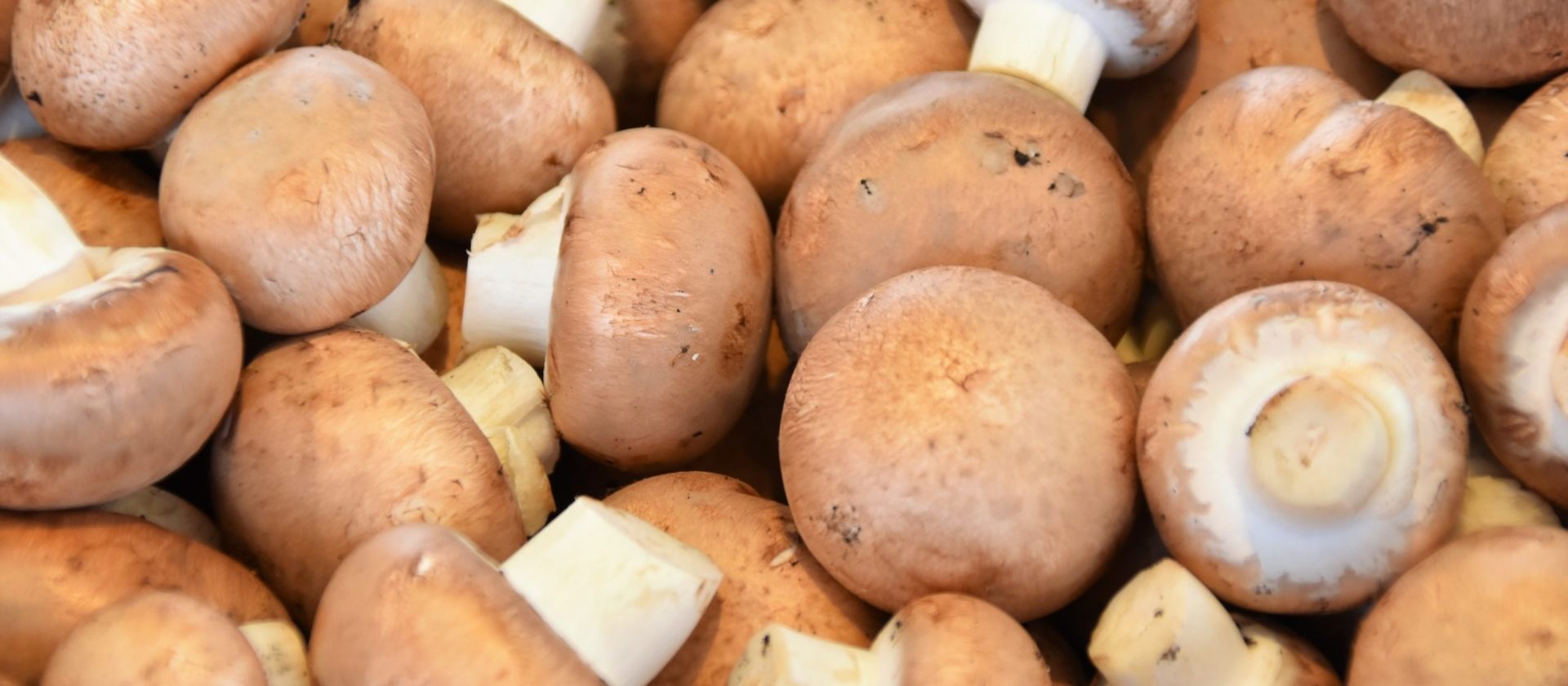
I see a lot of articles all over the Internet about how mushrooms are poisonous to dogs. And dogs can definitely become very ill and even die from eating certain types of mushrooms. Other types, however, are very beneficial and even contain powerful anti-cancer compounds. So, it’s no surprise that I get asked the question a lot, “Can dogs eat mushrooms?” And if so, which mushrooms should my dog avoid and which are safe?
In this post, we’ll dig deep into this complex fungus and discover if, and when, your dog can eat them and which ones to stay far away from.
What are Mushrooms?
Quite simply, mushrooms are a fungus. The fungi (plural for fungus) family is actually its own kingdom, separate from other types of organism, such as animals, plants and bacteria. When we think of a fungus, it’s natural to think of something that’s harmful and that we want to stay away from. But, that’s not always the case. Some fungi, such as edible mushrooms, are beneficial.
In fact, some types of mushrooms are so coveted that they are considered a delicacy–and a costly one at that. Truffles are a member of the fungi kingdom that grow underground near the roots of certain trees throughout Central Europe. These little delicacies, especially white Alba truffles from Italy, can fetch $4,000 per pound!
But I digress... we probably aren’t feeding $4,000 per pound truffles to our dogs (at least, most of us aren’t)!
As I said, mushrooms are fungi, not plants. They get their nutrition from breaking down dead organic matter, such as dead leaves.
Unlike their expensive truffle cousins, mushrooms grow above ground. Mushrooms are actually the reproductive part of some fungi. You know how fruit has seeds that enable it to multiply? Well, mushrooms have spores–millions of them. They’re microscopic and they’re located underneath the mushroom cap in the gills or pores (that’s the part you typically scoop out before making stuffed mushrooms!)
Like seeds of plants, mushroom spores are carried by the wind or spread in other ways. If the mushroom spores land in a suitable place that can provide them with the nourishment they need to grow (such as moist soil or wood) they’ll germinate and form a microscopic root system that penetrates into the new food source to absorb nutrients. This root system is made up of a mass of branching, thread-like filaments called hyphae, which as a group are called the mycelium.
When the conditions are right and the body has stored enough nutrients and other essential compounds, it will fruit, or produce a mushroom that pops up from underground.
Although the mushrooms themselves have short lives, the mycelium network continues to live and grow underground for many years, extracting nourishment from its environment and producing an annual crop of mushrooms.
Poisonous Mushrooms: STAY AWAY!
I cannot stress this enough:
You NEVER want to let your dog eat a mushroom growing outside in the wild. These mushrooms can be highly poisonous and fatal.
If your dog ever gets ahold of a wild mushroom, rush him to your veterinarian or the nearest emergency veterinary clinic for treatment to rid the dog of the toxin and administer supportive care.
If your dog eats a wild mushroom, assume it is poisonous and rush him immediately to the veterinarian or nearest emergency clinic for treatment.
Types of poisonous mushrooms:
According to ASPCA Pro, poisonous mushrooms typically fall into one of the following types of toxicity categories:
- Hepatoxic: These types of poisonous mushrooms cause acute liver failure. However, signs might not occur for 6 – 12 hours, which can create a false sense of security. Dogs who have ingested a hepatoxic mushroom can begin to show signs of gastrointestinal distress and then quickly go into liver failure and die within one to two days of ingesting the toxin. Hepatoxic mushrooms include “death cap” and “deah angel” (Amanita phalloides).
- Neurotoxic: Neurotoxic mushrooms are those that cause neurological signs of poisoning. Dogs who ingest a neurotoxic mushroom can show signs as soon as 30 – 90 minutes and likely less than six hours after exposure. The three main types of neurotoxic mushrooms are psilocybin (“magic”) mushrooms, hydrazines and isoxazole mushrooms. Signs of poisoning from neurotoxic mushrooms include weakness, impaired balance or coordination (ataxia), tremors, seizures, gastrointestinal distress, disorientation, hallucinations and vocalization.
- Gastrointestinal: Dogs that ingest these types of toxic mushrooms typically show signs rather quickly, from 15 minutes to less than six hours after exposure. Signs can be mild to severe and include severe vomiting and diarrhea leading to hypovolemia (rapid loss of blood and body fluids), which can lead to life-threatening hypovolemic shock. Affected dogs can also experience bradycardia (abnormally slow heart rate), bronchial secretions, salivation, lacrimation (abnormal secretion of tears), urination, defecation, dyspnea (shortness of breath) and emesis (vomiting). A type of mushroom in this group is the muscarinic mushroom.
- Nephrotoxic: Nephrotoxicity is toxicity to the kidneys. This type of mushrooms toxicity involves caused by Cortinarius spp., the largest genus of mushrooms in the world. Poisoning from nephrotoxic mushrooms is typically delayed from 12 hours to even longer than eight days. Signs include polydipsia (excessive thirst), polyuria (excessive urination), vomiting, nausea and dehydration. Although there are no reports of accidental poisoning of this type of mushroom in dogs, extreme caution is still warranted.
According to PetMD, poisonous mushrooms for dogs include:
Liver toxic mushrooms
- Amanita phalloides (Death Cap Mushroom)
- Amanita ocreata (Angel of Death)
- Lepiota (False Parasol)
- Galerina
Hallucinogenic Mushrooms
- Conocybe
- Gymnopilus
- Psilocybe
- Panaeolus
Toadstool Mushrooms
- Amanita pantherina (Panther Cap)
- Amanita muscaria (Fly Agaric)
Mushrooms Containing Muscarinic Agents
- Inocybe
- Clitocybe
False Morel Mushrooms
- Gyromitra esculenta (Beefsteak)
- Gyromitra caroliniana
- Mushrooms in the Verpa genre
- Mushrooms in the Helvella genre
Mushrooms That Cause Gastrointestinal Distress
- Boletus
- Chlorophyllum
- Entolomo
Health Benefits of Edible Mushrooms
Now that we’ve gotten the scary stuff out of the way and determined that your dog should NEVER eat any sort of wild growing mushroom, let’s talk about the health benefits of EDIBLE mushrooms.
Edible mushrooms are the type that you find at the grocery store. These mushrooms have been cultivated, meaning that they have been farmed under controlled conditions.

Always be sure to purchase your mushrooms from a trusted grocery source to be sure they are properly cultivated and edible.
To be sure the mushrooms you purchase for your dog (or yourself, of course!) are edible, be sure to purchase them from a reputable grocery store. This way, you know that you are purchasing cultivated mushrooms, meaning mushrooms that have been specifically farmed for commercial use under controlled conditions.
The following types of edible mushrooms are safe for dogs:
- Cremini
- Maitake
- Portobello
- Porcini
- Reishi
- Shiitake
- White button
Edible mushrooms contain an incredible variety of health benefits. In fact, they’ve been used for thousands of years for their medicinal components. Hippocrates (the father of medicine) even classified certain mushrooms as anti-inflammatory way back in 450 BCE!
Mushrooms are so healthy that 50% of all cultivated mushrooms contain functional medicinal properties. No wonder mushrooms are considered a superfood!
Mushrooms are an excellent source of vitamins and minerals, including B vitamins, choline, vitamin C, selenium and potassium. They’re also one of the only plant sources of vitamin D (to contain significant amounts of vitamin D, the mushrooms must be grown under UV light, such as the sun or a UV lamp.)
Mushrooms are rich in antioxidants, such as vitamin C and selenium. Antioxidants are compounds that fight free radicals that cause inflammation in the body. Inflammation is linked to a host of chronic diseases, including heart disease, cognitive decline and cancer.
Medicinal mushrooms boast a wide variety of important health benefits, including:
- Antibacterial
- Antidiabetic
- Antifungal
- Antihypercholesterolemia
- Antiparasitic
- Antioxidant
- Antitumor
- Antiviral
- Cardiovascular benefits
- Detoxification
- Free radical scavenging
- Hepatoprotective
- Immunomodulating
Mushrooms most important health benefit may well be its potential as an anti-cancer ingredient. Research shows that certain types of mushrooms can slow or stop the growth of cancerous tumors or kill tumor cells.
More than 100 types of mushrooms are used in Asia to treat cancer, including Ganoderma lucidum (reishi), Lentinus edodes (shiitake) and Grifola frondosa (maitake).
Scientific studies show that certain lectins, a type of protein in mushrooms, are able to target and attach themselves to cancer cell membranes or their receptors, blocking tumor growth and promoting apoptosis (cancer cell death). Researchers are currently studying the use of mushroom lectins in cancer therapy.
Mushrooms also contain polysaccharides that are being studied for their role in cancer treatment. PSP (polysaccharide-peptide complex) and PSK (polysaccharide-protein complex) can help prevent the spread of cancer by activating an immune response in the host.
How to Add Edible Mushrooms into Your Dog’s Diet
Again, always be sure to purchase your mushrooms from a reputable grocery store to ensure they are cultivated and edible.
I also recommend that you purchase organic mushrooms. Even though they’re not on the Environmental Group’s “Dirty Dozen” list of the most pesticide laden fruits and vegetables, you’ve probably noticed how they are like a sponge and soak up liquids. Because of this, mushrooms can soak up pesticides and other undesirable toxins, so I stick to buying them organic.
As with all new foods, start slowly when adding mushrooms to your dog’s diet to be sure they do not have an allergic reaction to them.
Which is more nutritious; raw or cooked?
You might be wondering if mushrooms are more nutritious cooked or raw, and what’s the best way to cook them. As you’ve likely noticed, mushrooms shrink a lot when cooked. During this process, some nutrients are lost, while others are actually increased. This is true of many vegetables, which is why I typically recommend “mixing it up”: cook them on some days and chop, mince or puree and feed raw on the others.
According to research published online in the International Journal of Food Sciences and Nutrition, grilling and microwaving mushrooms retain the highest amount of nutrients and even increase antioxidant activity. Frying and boiling mushrooms causes the greatest loss of nutritional value.
Avoid feeding mushrooms that are prepared with heavy fats, such as oil, butter or cream. And, never feed mushrooms that are mixed in with any toxic food for dogs, such as onion, leeks, shallots or scallions.
Conclusion
Cultivated edible mushrooms are packed with powerful health benefits for both people and dogs. Just be sure to introduce them slowly (as you would with any new ingredient) to be sure that your dog does not have any sort of a reaction.
And, of course, never let your dog forage for mushrooms or eat any wild mushroom. If that does happen, rush him immediately to the veterinarian for treatment.
Before you go, I’d love to know:
- Do you give cultivated edible mushrooms to your dog?
- If so, how do you prepare them?